
2026-06-01
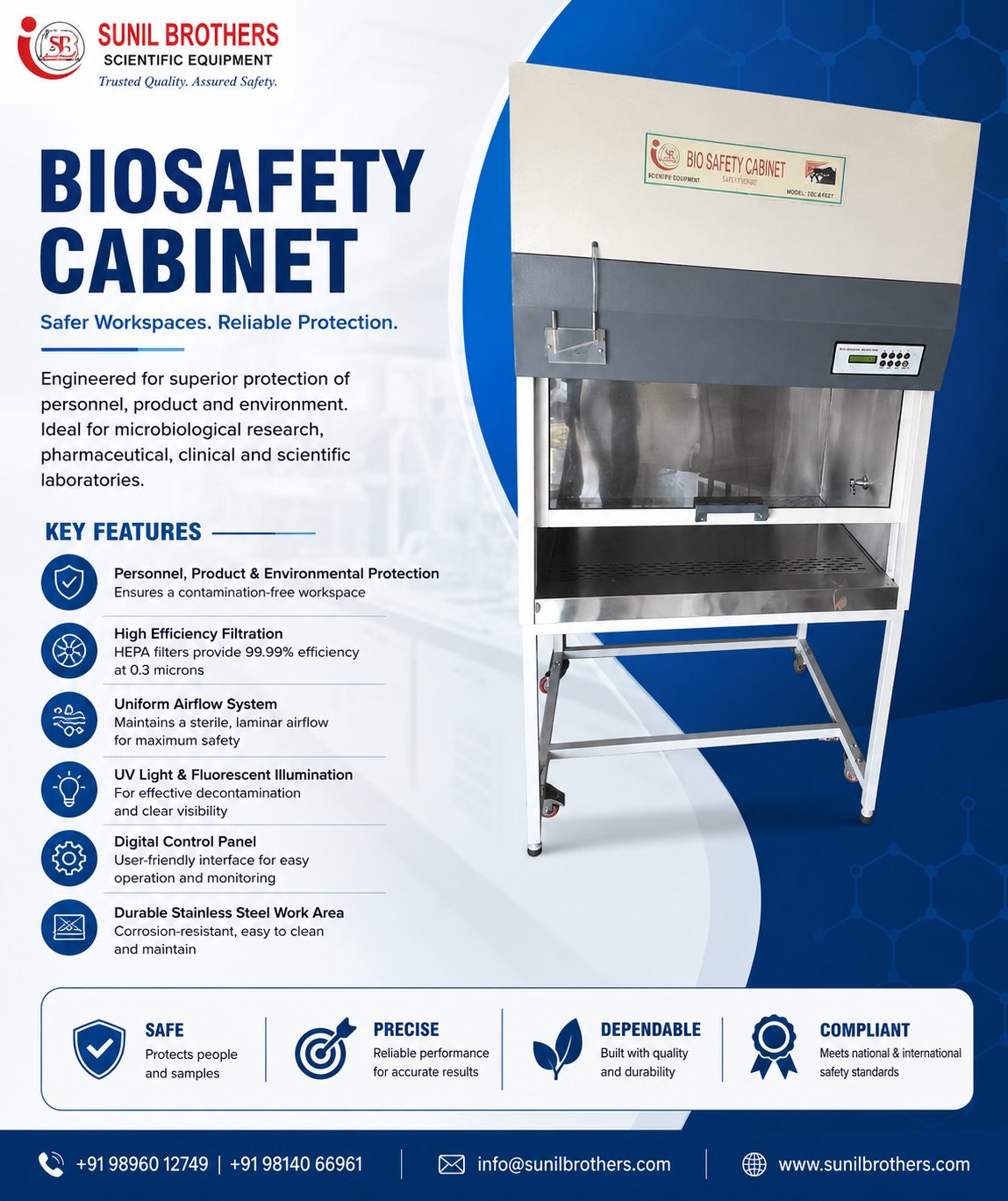
A Biosafety Cabinet (BSC) is one of the most critical pieces of equipment in modern laboratories. It provides a controlled and contamination-free environment for handling biological materials while protecting laboratory personnel, products, and the surrounding environment. However, achieving optimal performance requires regular maintenance and proper operating practices.
At SUNIL BROTHERS, we understand the importance of laboratory safety and compliance. This comprehensive guide outlines the essential daily, weekly, monthly, and annual maintenance procedures required to keep your biosafety cabinet operating efficiently and safely.
Routine maintenance is essential for ensuring the effectiveness and longevity of a biosafety cabinet. A properly maintained cabinet offers several benefits:
Neglecting maintenance can compromise laboratory safety and lead to inaccurate research results.
Daily maintenance is the foundation of biosafety cabinet performance and safety.
Before beginning any laboratory work, operate the cabinet for at least five minutes. This allows the airflow system to remove airborne contaminants and establish a clean working environment.
Verify that:
Clean and disinfect:
Use 70% isopropyl alcohol or an approved laboratory disinfectant. Always wipe from the cleanest area toward the most contaminated area.
Dispose of contaminated materials according to laboratory hazardous waste procedures. Avoid leaving unnecessary items inside the cabinet.
At the end of the workday, allow the cabinet to run empty for 5–10 minutes before switching it off. This helps clear any remaining airborne particles.
Weekly cleaning helps maintain the cabinet’s efficiency and cleanliness.
Inspect the drain pan for:
Handle all removed materials as potentially hazardous waste.
If your cabinet includes a UV lamp:
Use a damp cloth to clean external surfaces while avoiding direct contact with electronic controls and display panels.
Document all cleaning and inspection activities in the biosafety cabinet maintenance logbook.
More detailed inspections should be conducted monthly or quarterly.
Over time, stains and residue may accumulate on stainless steel surfaces. Use recommended laboratory-grade polishers to restore surface quality.
After polishing:
Check all cabinet fixtures for:
Air diffusers should be inspected and cleaned periodically to maintain proper airflow distribution and cabinet efficiency.
Annual certification is mandatory for maintaining biosafety cabinet performance and regulatory compliance.
A qualified technician should perform:
This includes measuring:
HEPA filters must be tested to ensure effective containment and filtration. Common testing methods include:
Smoke testing confirms proper airflow patterns and identifies potential disruptions within the work area.
Particle testing ensures the cabinet continues to provide the required level of cleanliness.
Replace UV lamps according to manufacturer recommendations to maintain effective surface decontamination.
All maintenance reports, certifications, and testing results should be carefully documented and stored.
To maximize cabinet performance and laboratory safety:
If issues occur:
Follow laboratory emergency procedures and secure all biological materials until normal operation is restored.
Immediately investigate airflow disruptions, blocked grilles, or system malfunctions before continuing work.
Contain and disinfect spills according to laboratory biosafety protocols. Significant contamination may require complete cabinet decontamination before reuse.
Any cabinet damage should be reported and repaired promptly by qualified personnel.
Proper maintenance is essential for ensuring the safety, reliability, and efficiency of any biosafety cabinet. By following daily cleaning procedures, conducting routine inspections, and scheduling annual certification, laboratories can maintain a contamination-free environment while meeting regulatory requirements.
SUNIL BROTHERS is committed to supporting laboratories with high-quality biosafety solutions and expert guidance. A well-maintained biosafety cabinet not only protects valuable research but also safeguards laboratory personnel and ensures long-term operational excellence.
Sunil Brothers is a North India based organization located in Ambala, Haryana. The firm is engaged in the manufacturing and supplying of Laminar Flow Air Cabinet,Bio Safety cabinet, Fume Hood, Inoculation Chamber, Tissue Culture Rack,pharmacy equipment,autoclaves.. Read More
© Copyright | All Rights Reserved | Designed By Web World India

