
2026-06-03
In modern laboratories, pharmaceutical facilities, biotechnology research centers, and electronics manufacturing units, maintaining a contamination-free environment is critical. Even microscopic airborne particles can compromise experiments, contaminate products, or affect manufacturing quality. This is where Laminar Air Flow (LAF) systems play a vital role.
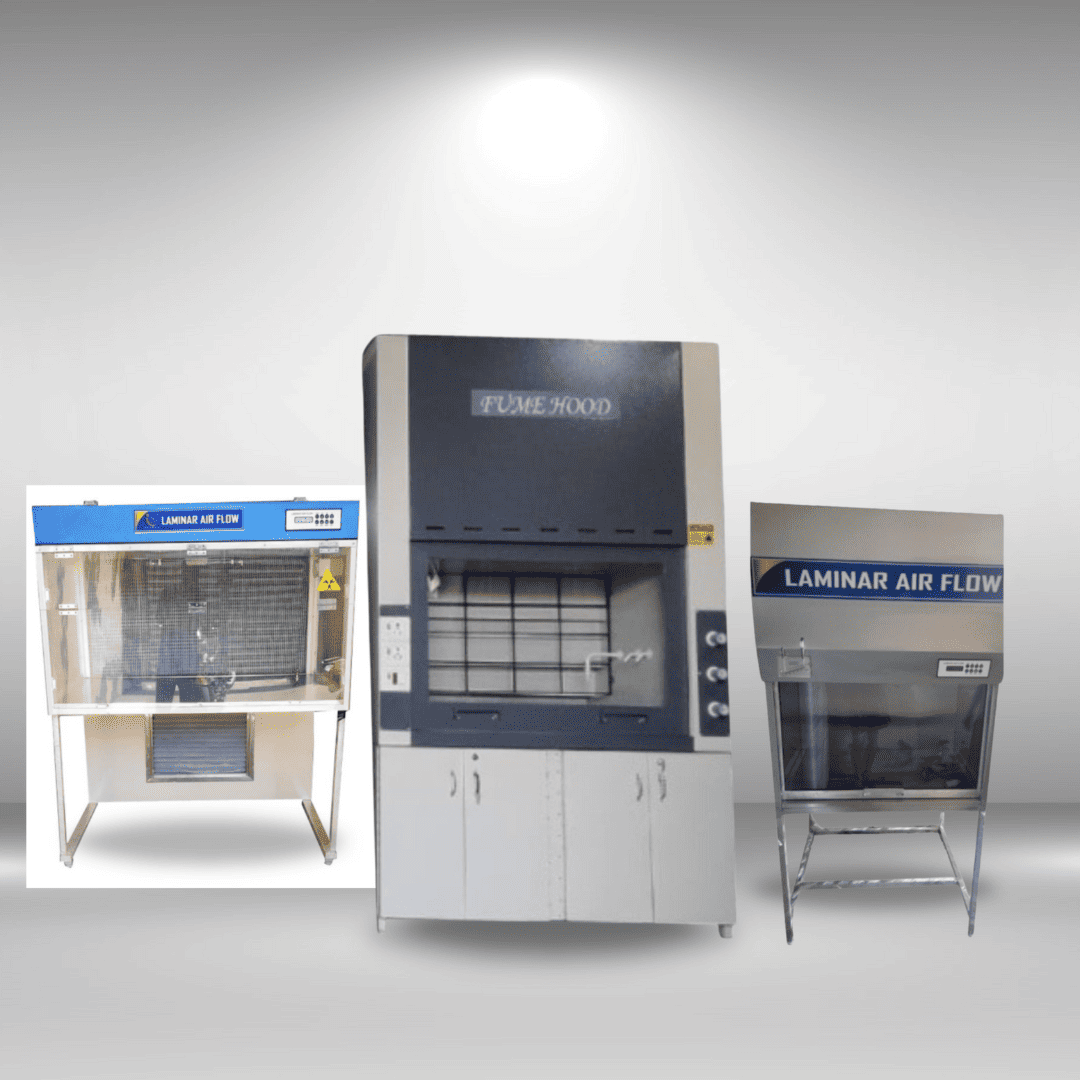
A Laminar Air Flow cabinet is designed to provide a sterile and particle-free workspace by directing filtered air in a uniform, unidirectional flow. By removing airborne contaminants and maintaining positive pressure within the work area, LAF units ensure a safe and clean environment for sensitive operations.
Laminar Air Flow (LAF) is a controlled airflow system that creates a clean working environment by allowing air to move in parallel layers with minimal turbulence. The system uses advanced HEPA (High-Efficiency Particulate Air) or ULPA (Ultra-Low Penetration Air) filters to remove airborne contaminants such as dust particles, bacteria, fungal spores, and other microorganisms.
HEPA filters are capable of removing 99.97% of particles measuring 0.3 microns or larger, making Laminar Air Flow cabinets essential for sterile laboratory operations and precision manufacturing processes.
The primary objective of a Laminar Air Flow workstation is to protect samples, products, and processes from environmental contamination.
The Laminar Air Flow cabinet operates on the principle of continuous, unidirectional airflow through highly efficient filtration systems. This ensures that contaminants are continuously removed from the workspace.
Ambient air from the surrounding environment enters the Laminar Air Flow unit through the air intake system.
The incoming air passes through a pre-filter, which captures larger dust particles and contaminants. This stage protects the HEPA filter and increases its lifespan.
A high-performance blower or fan draws the filtered air and directs it toward the HEPA filtration system.
The air passes through a HEPA filter that removes bacteria, fungal spores, and airborne particles with an efficiency of 99.97% for particles measuring 0.3 microns or larger.
The purified air flows uniformly across the workspace in either a horizontal or vertical direction at a constant velocity, creating a sterile work zone.
The continuous airflow pushes contaminants away from the work area, preventing particle accumulation around sensitive materials.
The cabinet maintains positive pressure inside the work chamber, preventing contaminated external air from entering the sterile workspace.
In horizontal LAF units, filtered air flows from the back of the cabinet directly toward the operator.
Advantages:
In vertical LAF units, filtered air moves downward from the top of the cabinet toward the work surface.
Advantages:
Laminar Air Flow cabinets are extensively used in research laboratories where sterile conditions are essential.
Applications include:
Pharmaceutical companies rely on LAF systems to comply with GMP standards and maintain sterile production environments.
Applications include:
Electronic components are highly sensitive to dust contamination.
Applications include:
Healthcare institutions use Laminar Air Flow systems to maintain sterile environments during critical procedures.
Applications include:
Biotechnology laboratories require contamination-free environments for advanced research and development.
Applications include:
Creates a contamination-free workspace by continuously filtering airborne particles.
Reduces the risk of product contamination during manufacturing and testing.
Supports compliance with GMP, GLP, ISO, and other quality standards.
Removes 99.97% of airborne particles, ensuring superior cleanliness.
Provides consistent airflow and dependable performance for critical applications.
Safeguards laboratory samples, cultures, and products from environmental contamination.
Laminar Air Flow systems are indispensable in industries where cleanliness, sterility, and contamination control are essential. By utilizing HEPA-filtered air and maintaining a continuous unidirectional airflow, LAF cabinets create a highly controlled environment for laboratory research, pharmaceutical manufacturing, biotechnology applications, healthcare procedures, and electronics production.
At Escolabs, our advanced Laminar Air Flow cabinets are engineered to deliver reliable performance, superior filtration efficiency, and long-term operational excellence, helping laboratories and industries maintain the highest standards of cleanliness and product quality.
Sunil Brothers is a North India based organization located in Ambala, Haryana. The firm is engaged in the manufacturing and supplying of Laminar Flow Air Cabinet,Bio Safety cabinet, Fume Hood, Inoculation Chamber, Tissue Culture Rack,pharmacy equipment,autoclaves.. Read More
© Copyright | All Rights Reserved | Designed By Web World India

